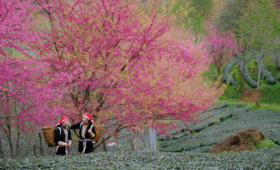

1. Overview
Cultural tourism is becoming a major trend as travelers seek lasting spiritual values instead of just sightseeing. Vietnam, with its rich UNESCO heritage sites, is a top destination for these meaningful journeys of discovery.
Vietnam culture tours are not simply sightseeing but also a deep connection between tourists and the soul of the country, helping you have a more profound experience on your trip.
2. Why Do Vietnam Culture Tours Attract International Tourists?
The cultural differences are the magnet that attracts tourists from all over the world to Vietnam. They found here a wonderful balance between modern life and ancient values that have been preserved intact.
The Vietnam Culture Tours system is increasingly improving in service quality and the professionalism of its tour guides. Each trip is not only sightseeing but also a valuable lesson in compassion and appreciation for heritage.
3. Vietnam Culture Tours: Outstanding and Unique Cultural Areas
3.1. Hanoi – The Starting Point for Northern Vietnam Culture Tours
The capital city of Hanoi is always the heart of any cultural exploration journey, thanks to its rich history spanning over a millennium. The small streets in the Old Quarter still retain the old rhythm of life with nighttime street vendors and the aroma of traditional dishes.
Visitors can begin by visiting the Temple of Literature – National University to learn about the Vietnamese tradition of valuing learning. This is a symbol of respect for knowledge and a place to honor the talented individuals of the feudal dynasties.
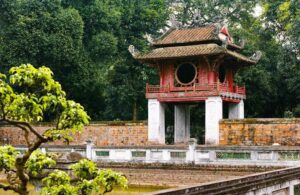
The Temple of Literature – National University is not simply Vietnam’s first university, but also a symbol of the tradition of valuing education, a torch that always burns brightly in the journey of illuminating knowledge. (Source: internet)
3.1.1. Water Puppet Art at Thang Long Theatre
Water puppetry is a unique art form born from the rice paddies of the Northern Delta. Puppet masters manipulate puppets underwater, creating vivid performances depicting daily life and folk legends.
The reference price for a high-quality water puppet show is approximately 7.62 USD per adult. You can easily book in advance on the theatre’s official website to secure the best viewing spots: Thang Long Puppet Theatre.
3.1.2. Exploring the 36 Old Streets by Electric Tram
Riding a slow-moving electric tram through Hang Bac, Hang Gai, or Hang Dao streets offers a comprehensive view of the characteristic tube-house architecture. Visitors will learn about the history of each street and how the people of Thang Long organized their commercial life in the past.
A 40-minute electric tram ride costs approximately 13.33 USD for a group of 5 to 7 people. This is a great option on Vietnam culture tours to save energy while still exploring the nooks and crannies of the old town.
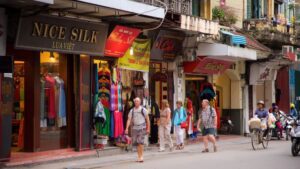
Hang Gai Street is lined with shops selling colorful silk and fabrics. (Source: internet)
3.1.3. Visit the Vietnam Ethnic Culture Village – Tourism
The Vietnam Ethnic Culture Village is a typical destination in Vietnam culture tours, helping visitors discover the cultural diversity of 54 ethnic groups across Vietnam. The vast space authentically recreates the architecture of houses, daily life, and traditional customs characteristic of each region.
Located in the Dong Mo Tourist Area, Son Tay commune, about 45 km from the center of Hanoi, the tourist area is conveniently integrated into Vietnam Culture Tours in the North.
Visitors can participate in experiential activities such as watching folk performances, traditional festivals, or enjoying local cuisine. These hands-on experiences make Vietnam Culture Tours more vibrant and culturally rich.
The entrance fee to the Vietnam Ethnic Culture and Tourism Village is currently around 1.15 USD per adult. Day tours from Hanoi, including transportation and a guide, start at approximately 38.10 USD per person, depending on the itinerary and included services.
3.2. Sapa Highland Culture and Ethnic Diversity
Sapa is not only captivating because of its cloud-covered landscapes but also because of the unique culture of the Hmong, Dao, Tay, and Giay people. Each village here is a living treasure trove of traditional clothing, languages, and rituals.
Vietnam culture tours in Sapa often focus on homestay experiences, allowing tourists to live with the locals. This helps you better understand how they cultivate terraced rice fields and preserve traditional crafts.
3.2.1. Exploring the Traditional Embroidery Art of the Red Dao People
Red Dao women are renowned for their vibrant costumes and incredibly intricate hand-embroidered patterns. Tourists can participate in short embroidery classes to create meaningful souvenirs for themselves.
The cost for a local cultural experience, including embroidery lessons and lunch with the locals, is approximately 22.85 USD. You can find in-depth ethnic culture tour packages at Ethnic Travel.
3.2.2. Sapa Love Market and Spring Festivals
Every Saturday evening, the area in front of the Sapa stone church is bustling with the sounds of flutes and love songs sung by young men and women from the highlands. This is a unique spiritual and cultural feature that expresses the love between couples and the strong community connection.
Visitors coming here in early 2026 will have the opportunity to participate in the rice planting festival to pray for a year of favorable weather. Participating in traditional flute dances or playing folk games brings indescribable joy to those who love exploration.
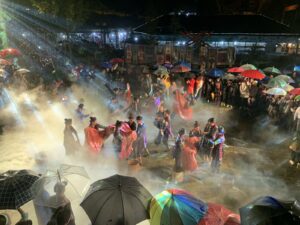
The Sa Pa Love Market, a unique cultural feature of the Northwest region, takes place every Saturday evening at Sa Pa Square, located right in front of the Sa Pa Stone Church, Lao Cai province. (Source: internet)
3.3. Ninh Binh – A Magnificent Cultural and Spiritual Space
Ninh Binh is known as the “Halong Bay on land” with its majestic limestone mountain system and ancient temples. Vietnamese culture tours here often combine sightseeing with learning about the history of the ancient capital of Hoa Lu.
A boat trip on the Ngo Dong River will take you through caves and golden rice fields. The interplay between nature and people in Ninh Binh has created a land steeped in spirituality and history.
3.3.1. Bai Dinh Pagoda Complex and Its Records
Bai Dinh Pagoda is the largest cultural and spiritual center in Vietnam, holding many records for its bronze Buddha statues and Arhat corridors. Visitors will be guided on Vietnamese Buddhist philosophy and admire the massive architectural structures.
The ticket price for using the electric tram service to tour the entire pagoda area is approximately 2.28 USD per round trip. You should spend at least half a day fully exploring the majestic beauty of this temple at sunset.
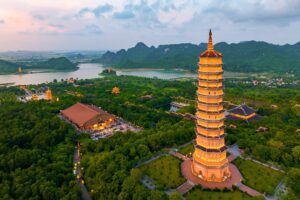
Located within the Trang An Scenic Landscape Complex – a World Cultural and Natural Heritage site, Bai Dinh Pagoda is renowned for its grand scale, unique and impressive architecture, rich cultural history, and is a famous spiritual destination. (Source: Báo Chính phủ)
3.3.2. Hoa Lu Ancient Capital – The Beginning of Dynasties
Hoa Lu was the first capital of unified Vietnam under the Dinh and Early Le dynasties in the 10th century. The temples dedicated to King Dinh Tien Hoang and King Le Dai Hanh are still preserved intact with exquisite stone carvings.
The current entrance fee to visit the Hoa Lu ancient capital historical site is approximately 0.76 USD per person. This is a must-see destination in all Vietnam culture tours in the North to learn about the origins of the nation.
3.4. Hue – The Capital of Court Art and Rituals
Hue is the only city in Vietnam that still retains the appearance of a feudal capital with its system of citadels and tombs. Hue culture is a blend of the elegance of the royal court and the rustic charm of the folk culture of the imperial land.
Exploring the ancient capital always brings a sense of tranquility and relaxation to visitors through its leisurely pace. You will feel time stand still beside the romantic Perfume River and the silent, ancient pine trees.
3.4.1. Hue Imperial Citadel and the Nguyen Dynasty Tombs
The Imperial Citadel was the workplace and residence of 13 Nguyen Dynasty kings, with architecture strictly adhering to feng shui principles. The tombs, such as the Minh Mang Tomb and the Khai Dinh Tomb, showcase completely different artistic styles.
The combined entrance fee for the Imperial Citadel and the main tombs is approximately 22.09 USD per international tourist. You can find detailed information about the attractions at the Hue Ancient Citadel Conservation Center.
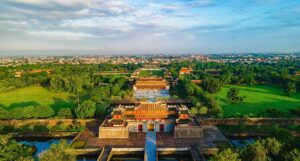
The Complex of Hue Imperial City Monuments, recognized by UNESCO as a World Cultural Heritage site, has become a distinctive highlight of Hue tourism, attracting a large number of domestic and international tourists. (Source: internet)
3.4.2. Hue Royal Court Music – Intangible Cultural Heritage
Hue Royal Court Music has been recognized by UNESCO as a masterpiece of the oral and intangible heritage of humanity. This type of music was once used in grand ceremonies and banquets of the ancient royal court.
Visitors can enjoy Nha Nhac performances at Duyet Thi Duong inside the Imperial Citadel for approximately 7.62 USD. The sound of the pipa and drum will transport you back in time to the ancient royal atmosphere.
3.5. Hoi An – A Living Museum of Cultural Exchange
Hoi An was a bustling trading port from the 17th century, a melting pot of cultures from Japan, China, and the West. The yellow-painted wooden houses and lantern-lined streets have left an indelible mark on international visitors.
Vietnam culture tours in Hoi An often focus on interacting with the local community through daily activities. You can participate in lantern-making classes or try rowing a basket boat in the Bay Mau coconut forest.
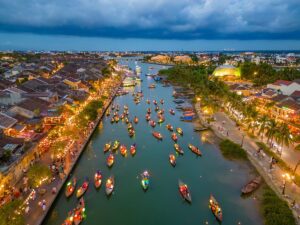
Vietnam’s Hoi An ancient town has just been ranked as the most beautiful historical center in Asia by the French online travel site Tourlane, alongside globally renowned heritage sites such as Krakow (Poland), Avignon (France), and Cartagena (Colombia). (Source: Báo Chính phủ)
3.5.1. Visiting Assembly Halls and Ancient Houses
The Fujian Assembly Hall and the Guangdong Assembly Hall are architectural works deeply rooted in the culture of the Chinese immigrants. Besides these, ancient houses like the Phung Hung ancient house are still home to many generations of the same family.
Each all-inclusive ticket to visit the historical sites in the ancient town costs approximately 5.71 USD for international tourists. This money is used to maintain and preserve architectural values affected by time and weather.
3.5.2. Unique Culinary Culture in Hoi An
Hoi An cuisine is a fusion of many different cultures, with famous dishes such as Cao Lau and Chicken Rice. A bowl of Cao Lau with chewy noodles and flavorful char siu pork costs only about 1.52 USD at street food stalls.
Visitors can also participate in cooking classes to learn about the unique spices of Central Vietnam. A full cooking class, including shopping and enjoying the results, costs approximately 28.56 USD at Red Bridge.
3.6. The Gong Culture of the Central Highlands – The Call of the Great Forest
The Gong culture of the Central Highlands is a precious heritage reflecting the vibrant worldview of the Ede, Gia Rai, and Bana ethnic groups. The sound of gongs is intertwined with every stage of human life, from birth to death.
Vietnam culture tours to Dak Lak or Gia Lai will take visitors to towering communal houses and mysterious burial grounds. You will feel the vibrant energy of the red basalt land through the graceful Xoang dances.
3.6.1. Experiencing the Gong Festival by the Campfire
Under the flickering firelight, visitors will drink rice wine and immerse themselves in the lively gong rhythm with the local boys and girls. This is when epic heroic stories are retold by the warm fire of the stilt house.
The cost to organize a gong and drum cultural exchange night for a group of tourists is approximately 57.13 USD, depending on the size. Tourists can contact travel agencies in Buon Ma Thuot to arrange the most authentic experiences.
3.6.2. World Coffee Museum – Modern Coffee Culture
Although a modern building, this museum honors the value of coffee beans in the spiritual life of the people of the Central Highlands. The building’s architecture is modeled after the traditional longhouse but with a futuristic feel.
The entrance fee to the museum and the coffee processing experience is approximately 5.71 USD per person. You will learn about the history of world coffee and how Vietnam became a leading coffee exporting country.
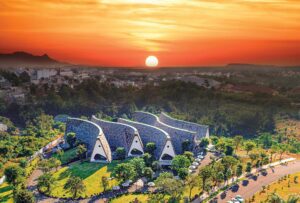
The World Coffee Museum – an iconic architectural landmark of Vietnam’s coffee industry – is a prominent destination in Vietnam culture tours and welcomes millions of tourists annually to Buon Ma Thuot, Dak Lak. (Image Source: The World Coffee Museum)
3.7. Mekong Delta – The Riverine Culture of the Western Region
The southern region welcomes visitors with generosity and orchards laden with fruit year-round. The culture of the Western region is closely linked to its canals, waterways, and unique Khmer-style temples in Soc Trang and Tra Vinh.
Vietnam culture tours here often start very early so that visitors can witness the vibrant life on the floating markets. This is a unique form of trade where all buying, selling, and eating activities take place on bobbing boats.
3.7.1. Cai Rang Floating Market – The Soul of the Land of Nine Dragons
Cai Rang Floating Market in Can Tho is a gathering place for hundreds of boats laden with agricultural products from all over the provinces. Visitors will see “bamboo poles” displaying various vegetables and fruits as a unique form of advertising by the people of the river region.
The cost of renting a small boat to visit the floating market early in the morning is approximately 11.42 USD per group. The feeling of enjoying a steaming bowl of noodle soup right on a boat amidst the river scenery is incredibly delightful.
3.7.2. Khmer Culture and Magnificent Temples
In provinces like Soc Trang, tourists can admire magnificent Khmer temples such as the Bat Pagoda or the Chen Kieu Pagoda. These are places that preserve the artistic values of sculpture and are centers of cultural life for the Khmer community.
Visiting these temples is usually free, but tourists should contribute a small amount to the temple. Please remember to dress modestly and respect religious rituals when entering this sacred space.
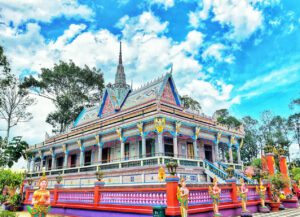
Chen Kieu Pagoda – A unique Khmer pagoda in Soc Trang, Vietnam. (Source: internet)
The Vietnam Culture Tours experience will be a brilliant memory in your travel diary. Vietnam always welcomes you with all sincerity and an enduring thousand-year-old heritage. Contact Asia Luxury Travel today to book your cultural tour package and don’t miss out on the best moments in Vietnam.